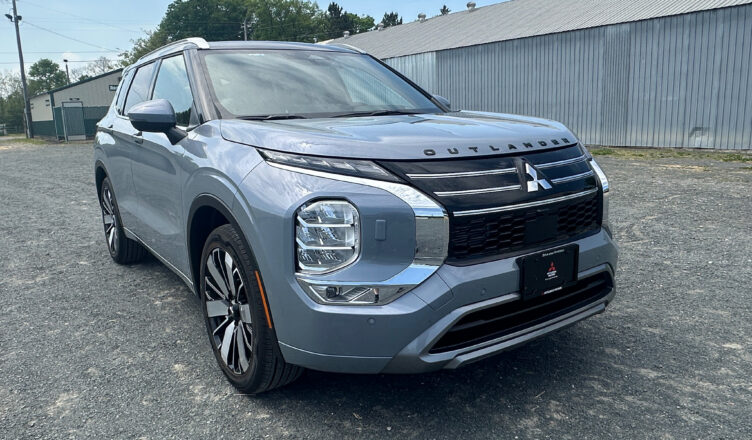
It has been five model years since its introduction. Yet, it has become their leading offering over at Mitsubishi. The Outlander compact SUV offers three rows of seats, a choice of drivelines, and a nice environment to drive around town of across the country.
As with most vehicles, there had to be some changes. For 2025, Mitsubishi gave the Outlander some mid-cycle updates. Some of which look subtle, but they added more value overall.
For 2026, the updates continue. This time it is about the drivelines. The Plug-In Hybrid will get the same cosmetic and interior updates as the gasoline model from last year, along with some driveline updates. However, the base model lineup gets something completely different – a new turbocharged mild-hybrid system.
By the end of this summer, the 2026 Mitsubishi Outlander will become a completely electrified lineup, with the updated plug-in hybrid driveline. It is one a several things that distinguishes this SUV from all others in its segment.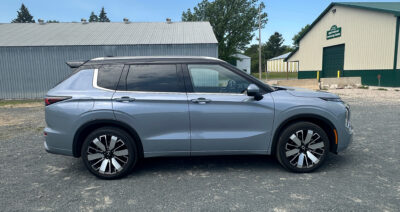
To recap the updates from a year ago, there is a smoother piano black finished upper fascia trim above the grille. A new set of wheel designs were added. Mitsubishi retained a lot of what makes the Outlander stand out in this segment, including the Dynamic Shield front end design, LED headlamps flanking the sides of the fascia with a pair of driving lights/turn signals up top.
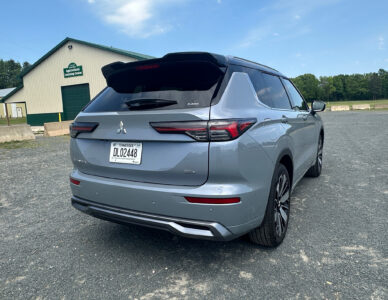
The roofline retains the “floating roof” trim, the roof itself is painted in black. The glass is framed by a chrome piece that marks the roofline perfectly. All of which finishes up with horizontal LED taillight units and a wide-opening liftgate.
Our SEL tester is equipped with the Premium Package. That adds a handsome set of 20-inch two-tone alloy wheels, and a panoramic sunroof.
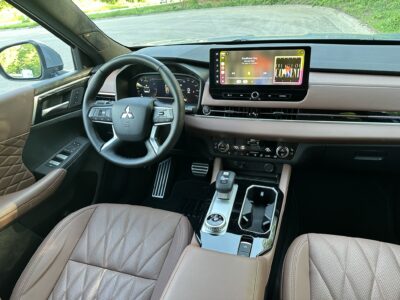
Interior-wise, the 2026 Outlander SEL is a very nice place to be. The driver is greeted by a 12.3-inch fully digital instrument cluster that can be customized for view and information. This is augmented by a10.8-inch head-up display that is bright and very readable. The center stack has a large 12.3-inch infotainment touchscreen offering a host of connected features and information. All of the controls and switches are good to the touch, including the sliding transmission shifter.
 One welcomed addition from last year was the 12-speaker Yamaha Dynamic Premium Sound System. This upgraded audio experience emits clean sound throughout the cabin with excellent separation.
The first two rows of seats are upholstered in a lovely swath of Brick Brown leather. The front seats were comfortable and supportive. The 40/20/40-split second-row seats were fine, taller passengers would have to tuck their heads into a space behind the panoramic sunroof. The third row is strictly for children. However, they do fold completely flat into the rear load floor. That includes the headrests, which you used to remove before folding down the third-row seats for more cargo.
Cargo space starts with a small 11.7 cubic foot space behind the third row. If you fold down the third row – and stow the headrests inside the compartment behind those seats – and that space expands to 33.5 cubic feet. Fold both rear rows down, and you get 78.3 cubic feet of space.
The big news for 2026 is the engine. You now have a 1.5-liter turbocharged four-cylinder mild-hybrid driveline. While power is down to 174-horsepower, the 48-volt electric add-on helps to restore energy when braking and accelerating. While it improves overall efficiency, it also offers more torque, rated 206 pound-feet.
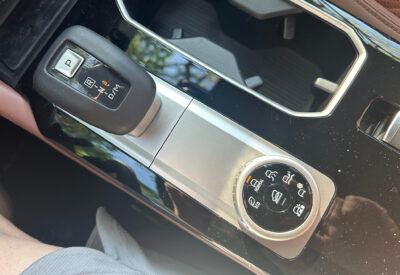 This new engine is connected to a continuously variable transmission sending power to Mitsubishi’s Super All-Wheel-Control system. You can adjust the type of traction you need from a knob on the center console offering six pre-set drive modes.
We found the new driveline an interesting mix, depending on the type of driving you do. In town, the driveline was smooth with linear throttle responses. It was equally smooth when cruising along the highway. However, lane changes and passing were a bit challenging with some hesitation at times, As for fuel economy, we observed an average of 25.1 MPG in our care.
What has not changed is the smooth ride quality. The 2026 Outlander absorbed every kind of road surface. Maneuverability was also good. We noticed minimal lean and roll through the corners.
The steering system still impressed us. It offered a tight turning radius and solid control at the wheel. On-center feel was also quite good. Even with the new mild hybrid system, the brakes felt pretty decent. The 2026 Outlander returned great stops in normal and panic situations. While it had a long than usual pedal travel, it works to get the 2026 Outlander to stop on point without any issues. Although we found some issues with the regeneration system, as it affected some braking.
 If there is one feature we appreciated the most, it is the MI-PILOT driver assistance system. With one press of a button on the steering wheel, a series of driver assist functions come to life working together to keep on a guided path, while protecting you. On a recent journey just north of the Twin Cities, our journey on the interstate was a smooth and easy one,
There are now nine trim levels available for the mild-hybrid-powered 2026 Mitsubishi Outlander. Pricing starts at $29,995. Our SEL with the Premium Package tester came with a sticker price of $47,035.
The 2026 Outlander has evolved into a relevant SUV in a highly competitive segment. It is now a familiar design, but it comes down to the details that make it worth the look. It is perhaps the SUV that will keep the brand moving onward.